 Call Us: 01295 263 364
What to Consider When Choosing the Right Door for Your Commercial Building
Quick Summary
Choosing the right commercial building door requires evaluating durability, safety compliance, security features, and accessibility. Commercial doors are engineered to withstand high-frequency use by using materials such as commercial-grade aluminium, steel, or thick toughened glass. They must comply with accessibility laws by featuring low thresholds and a minimum clear opening of nine hundred millimetres. Enhanced security measures, including multi-point locking systems and secure glazing standards like PAS 24, are essential for protecting business premises. Automated operations and anti-finger-trap designs further improve safety and ease of use in high-traffic installations.
Selecting the right door for a commercial building is very different from choosing a door for a residential property. While both need to look welcoming and function smoothly, commercial doors must withstand heavy daily use, meet strict safety regulations, and provide enhanced security.
If you’re planning a new shop front, office entrance, or industrial doorway, here are the key factors to consider.
Why Commercial Doors Need to Be Different
A typical residential door is opened around 10–20 times a day. In contrast, commercial doors may be opened hundreds of times daily, often by a wide range of users. This means they must be engineered for:
- High‑frequency use
- Long‑term durability
- Compliance with safety and accessibility laws
- Strong security performance
- Customisation to suit branding and building design
Key Features to Look For in Commercial Glazed Doors
1. Durability and Strength
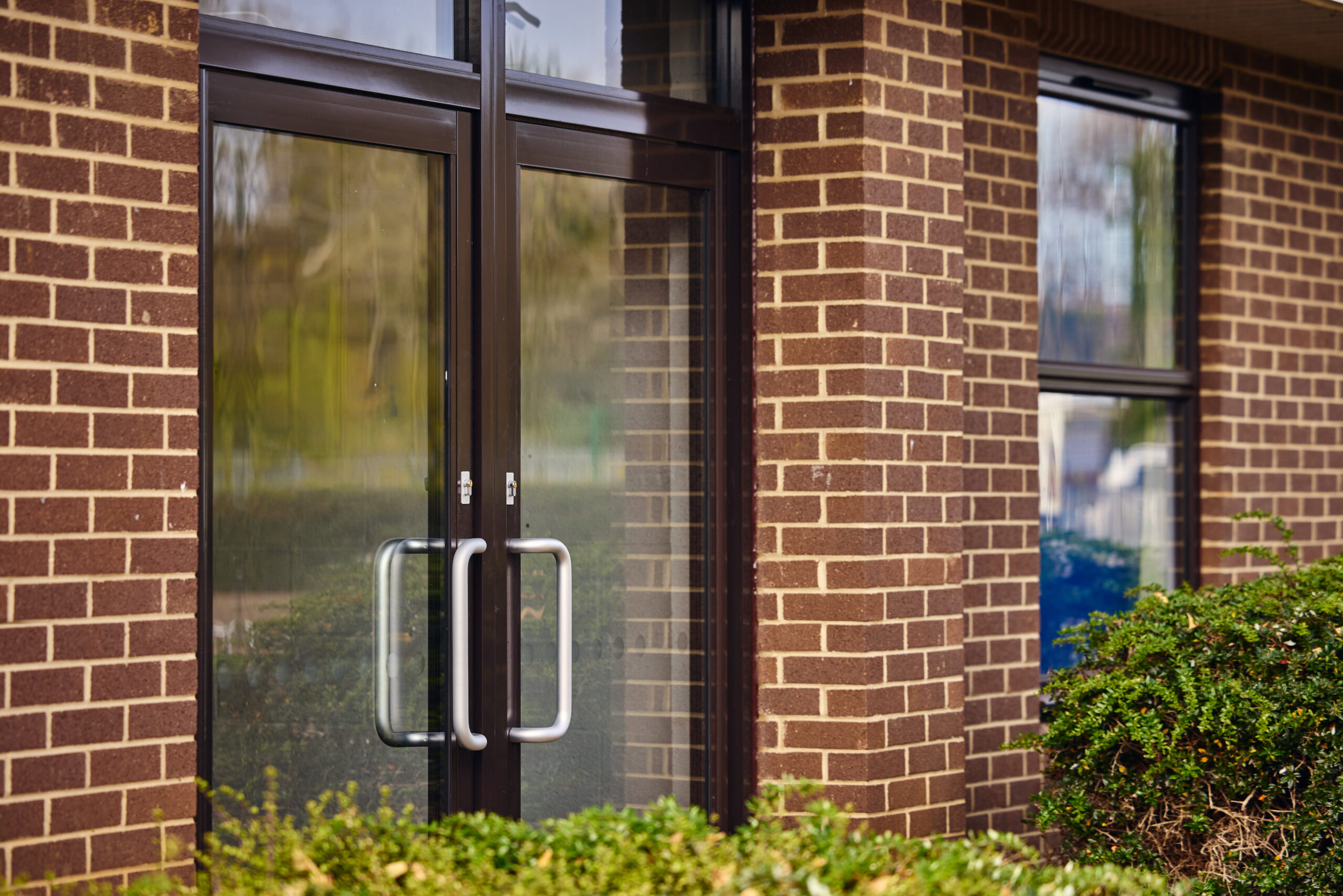
Commercial glazed doors are built using commercial‑grade aluminium, steel, or thick toughened glass. These materials are chosen for their ability to resist impact, weathering, and constant use.
Durability features typically include:
- Heavy‑duty hinges designed to support greater weight
- Robust door closers (hidden, surface‑mounted, or automatic)
- Reinforced frames to prevent warping or damage
This ensures the door maintains its appearance and performance even in high‑traffic environments.
2. Safety and Accessibility Compliance
All commercial doors must meet Equality Act (formerly DDA) accessibility requirements, including:
- A minimum 900mm clear opening for wheelchair access
- Easy‑to‑operate handles and hardware
- Low thresholds for smooth entry
In addition, many commercial doors must be fire‑rated, helping to contain smoke and flames in an emergency.
For exit routes, doors must include:
- Panic bars
- Push‑to‑exit hardware
- Immediate egress without a key
These features ensure the building remains safe and legally compliant.
3. Enhanced Security Features
Commercial buildings often contain valuable stock, equipment, or sensitive data. As a result, security is a top priority.
Common security enhancements include:
- Multi‑point locking systems
- Magnetic locks
- Electronic access control (keypads, fobs, card readers)
- Security‑rated glazing and frames
Commercial doors should meet recognised security standards such as PAS 24 or LPS 1175, which may also be required for insurance compliance.
4. Shop Front Design Features
A well‑designed shop front not only protects your premises but also enhances aesthetics and the customer experience.
Typical features include:
- Stall risers: A solid base that adds strength and protects against damage
- Large floor‑to‑ceiling glass panes to showcase displays
- Recessed entrances for improved customer flow
- Integrated security shutters for after‑hours protection
These elements combine practicality with visual impact.
5. Specialised Functionality
Depending on the building type, you may need additional features such as:
- Anti‑finger‑trap doors (ideal for schools, healthcare settings, and public buildings)
- Automated swing or sliding operation for contactless entry
- Scratch‑resistant or shatter‑proof glass coatings
- Thermally efficient glazing to reduce heat loss
These upgrades improve safety, convenience, and long‑term performance.
6. Customisation and Branding
Commercial doors are rarely “off the shelf”. They are usually:
- Made to measure for high‑traffic openings
- Powder‑coated in specific RAL colours to match brand identity
- Available with bespoke glazing, handles, and hardware
- Designed to integrate seamlessly with existing shop fronts or façades
This ensures your entrance reflects your business and enhances your building’s overall appearance.
Why Choose CN Glass for Your Commercial Doors?
At CN Glass in Banbury, Oxfordshire, we supply and install a wide range of commercial door systems, from aluminium shop fronts to secure glazed entrances. Businesses choose us because:
- We understand commercial safety, security, and compliance requirements
- We offer a comprehensive selection of high‑quality products
- All glaziers and fitters are directly employed by us
- We provide reliable, long‑lasting installations
- Our customers return to us time and again for our expertise and service
If you’re planning a commercial glazing, window, or door project, we’re here to help.
📞 Call us: 01295 263364 📩 Email: info@cnglass.co.uk 🌐 www.cnglass.co.uk